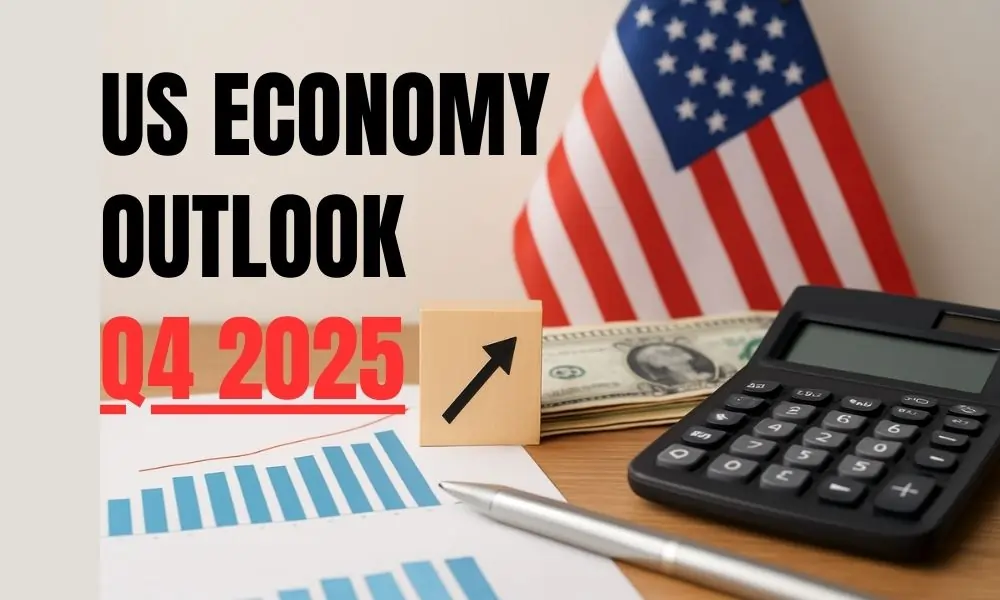
US Economic Outlook Q4 2025: What Americans Should Expect Before 2026
Quick Summary: The US Economic Outlook Q4 2025 highlights slower GDP growth, persistent inflation, and cautious Federal Reserve policies. For Americans, this means higher borrowing costs, elevated living expenses, and a cooling job market as the year ends. Consumer spending, housing trends and global trade risks will shape how families experience the economy before stepping into 2026.
Introduction: Why the US Economic Outlook Q4 2025 matters for American households
The final quarter of 2025 is not just another three months—it is a decisive period that sets the stage for how Americans will step into 2026. With holiday spending, government fiscal debates, and Federal Reserve decisions all converging, households are paying closer attention to the economy than ever before.
For everyday Americans, the US Economic Outlook Q4 2025 matters because it directly influences:
- Jobs and wages
- Prices for essentials such as food, housing, and fuel
- Interest rates on mortgages, credit cards, and savings
- Household savings and investment opportunities
How the US economy has performed in the first three quarters of 2025
The year 2025 has been a story of uneven growth. The economy contracted in the early months but gained momentum midyear. Still, overall growth has been modest compared to pre-pandemic averages.
- Q1 2025 showed contraction due to weak investment and slower global demand.
- Q2 2025 surprised with stronger GDP growth, supported by consumer spending and service sector resilience.
- Q3 2025 indicated moderation as higher borrowing costs began to weigh on businesses and households.
This mixed performance means that the US Economic Outlook Q4 2025 is clouded with both opportunity and risk, depending on consumer and policy responses.
What current inflation trends reveal about the cost of living in Q4 2025
Inflation has been a stubborn challenge throughout 2025. While some price pressures have eased, the cost of living remains high for many families.
- Food prices continue to reflect supply chain and weather disruptions.
- Housing and rent costs remain elevated, especially in urban markets.
- Energy prices have fluctuated due to global oil market shifts.
For middle-class Americans, these inflation trends mean tough choices: reducing discretionary spending, cutting back on vacations, or prioritizing essentials over lifestyle upgrades.
How Federal Reserve interest rate decisions affect Americans in Q4 2025
The Federal Reserve has held interest rates high throughout 2025 in its fight against inflation. This stance has far-reaching implications for households.
- Borrowing becomes more expensive — mortgages, auto loans, and credit card debt carry higher interest rates.
- Savings accounts and CDs offer better returns than in recent years.
- Investment portfolios face volatility as markets adjust to Fed policy.
While the Fed’s strategy aims to stabilize inflation, for many families it means higher monthly expenses and delayed financial goals.
What the latest jobs data says about the US labor market in late 2025
The US labor market has been strong compared to historical standards, but recent signs suggest cooling. Job creation has slowed and unemployment has inched upward.
- Service sectors such as hospitality and healthcare are still adding jobs.
- Manufacturing and construction show signs of slowing demand.
- Wage growth is decelerating, reducing households’ ability to keep pace with rising prices.
For workers, the US Economic Outlook Q4 2025 signals that job opportunities may become scarcer, and negotiating higher pay could be more difficult.
How consumer spending is shaping the US Economic Outlook Q4 2025
Consumer spending remains the backbone of the US economy, accounting for nearly two-thirds of activity. Holiday shopping in Q4 has always been critical, and this year it carries extra weight.
- Retail sales are expected to be moderate, with households cautious about big-ticket items.
- Holiday season spending could provide a temporary boost if confidence holds up.
- Discretionary purchases such as travel and electronics may slow as families prioritize essentials.
If consumer confidence remains resilient, the economy can avoid sharper slowdowns. But weak spending could be the tipping point toward stagnation.
Why energy prices and supply chains are still critical for the US economy in Q4 2025
Energy costs are one of the most visible expenses for American families, and they influence nearly every sector of the economy. At the same time, global supply chains remain vulnerable.
- Rising gasoline and heating costs affect commuting and winter bills.
- Global shipping delays continue to impact product availability.
- Supply disruptions raise costs for businesses, which are then passed on to consumers.
Energy and supply chains remain unpredictable factors that can quickly alter the US Economic Outlook Q4 2025.
How government fiscal policy and debt debates may affect Americans before 2026
Government spending and debt debates are once again in the spotlight. As the fiscal year closes, discussions about deficits and debt ceilings could create uncertainty.
- Budget deficits remain large, raising concerns about long-term sustainability.
- Debt ceiling debates threaten potential disruptions in government services.
- Taxpayers may eventually bear the cost through higher taxes or reduced benefits.
For Americans, these fiscal debates are more than politics — they shape the programs, credits, and support systems many families depend on.
What housing market trends mean for Americans in Q4 2025
Housing has been one of the hardest-hit sectors in 2025 due to high interest rates. Affordability remains a top concern.
- Mortgage rates stay elevated, discouraging new buyers.
- Home prices may stabilize or grow more slowly, though declines are unlikely in supply-constrained areas.
- Renters continue to face high monthly costs as demand outstrips supply.
Heading into 2026, many families are delaying homeownership dreams, waiting for conditions to improve.
How global events and trade relations shape the US Economic Outlook Q4 2025
The global economy remains intertwined with the US outlook. Trade relations, tariffs, and geopolitical conflicts directly influence growth prospects.
- US–China trade tensions have added costs to imports and reduced export competitiveness.
- A strong US dollar benefits travelers and importers but hurts US exporters.
- Geopolitical risks — including conflicts or energy supply shocks — could create sudden downturns.
Global events are often unpredictable, making them one of the greatest risks for the outlook heading into 2026.
What middle-class Americans should realistically expect from the economy before 2026
For middle-class households, the economic outlook is mixed. While job opportunities remain, the cost of living continues to erode savings and disposable income.
- Families face higher credit card bills as interest accumulates.
- Wage gains are not keeping up with inflation.
- Many households are building emergency savings as a cushion.
This group carries the burden of inflation and policy shifts most directly, making financial resilience more important than ever.
Conclusion: Key takeaways from the US Economic Outlook Q4 2025 for 2026 planning
The final quarter of 2025 is expected to bring slower growth, persistent inflation, and high borrowing costs. But it also offers opportunities for those who prepare wisely.
- Short term (Q4 2025): Families must brace for higher living costs and cautious spending.
- Long term (2026): The outlook suggests a mild slowdown, but planning can soften the impact.
Practical steps include focusing on savings, limiting unnecessary debt, and staying informed about policy and market changes.
As Treasury Secretary Janet Yellen recently noted, “The US economy remains resilient, but we must be vigilant as inflation and global risks continue to challenge households.
FAQ US Economic Outlook Q2 2025.
Q1. What is the US Economic Outlook Q4 2025?
The outlook is a forward-looking review of how the American economy is expected to perform in the last quarter of 2025. It considers GDP growth, inflation, jobs, consumer spending, housing, and government policy. This analysis helps families and businesses understand what to prepare for as the year closes.
Q2. Will inflation finally ease in Q4 2025?
Inflation may slow compared to early 2025, but it is unlikely to return quickly to the Federal Reserve’s 2% target. Rising energy costs, tariffs on imported goods, and housing shortages keep prices elevated. For households, that means groceries, rent, and utilities will continue to feel expensive.
Q3. How do Fed decisions affect families now?
The Federal Reserve’s high interest rate policy directly impacts daily life. Borrowing money for mortgages, car loans, or credit cards costs more, while savings accounts offer better yields. Families planning big purchases may wait, while savers benefit from higher deposit rates.
Q4. Is recession a risk by late 2025?
Yes, the risk exists but is not guaranteed. A mild slowdown could happen if consumer spending weakens or if global trade tensions worsen. Policymakers are attempting a “soft landing,” balancing inflation control without causing a deep recession.
Q5. Will consumer spending stay strong?
Spending is expected to hold up modestly, especially during the holiday season. However, households are more cautious about big-ticket purchases such as cars, appliances, and vacations. Confidence will determine whether consumer spending keeps the economy stable or drags it downward.
Q6. How are energy prices affecting the economy?
Energy costs influence almost every part of the economy—from filling up at the gas station to heating homes and transporting goods. If oil prices rise sharply, families pay more at the pump, and businesses raise prices, which feeds into inflation. Stable energy prices, however, can ease pressure.
Q7. What does this mean for housing affordability?
High mortgage rates mean fewer people can afford to buy homes, keeping many families in the rental market. Home prices may level off in some regions, but strong demand in cities prevents major price declines. Affordability remains one of the toughest challenges in Q4 2025.
Q8. How do global events affect Americans?
Global trade and geopolitics strongly influence the US economy. Tariffs raise costs on imported goods, while conflicts abroad can disrupt supply chains and energy supplies. Even if these issues feel far away, Americans experience them through higher prices and slower growth.
Q9. What should middle-class families do now?
Families should strengthen financial resilience. That means building or adding to emergency savings, paying down high-interest debt, and watching spending carefully. Avoiding risky financial moves and focusing on long-term stability will help withstand any shocks in 2026.
Q10. How should Americans plan for 2026?
The best approach is cautious but proactive planning. Households should:
Maintain emergency funds
. Avoid over-borrowing at high interest rates
. Diversify income sources and investments
. Stay updated on policy shifts, especially Fed decisions and government fiscal measures
By doing so, Americans can better manage uncertainty and prepare for the changes 2026 may bring.