Will the $2,000 Stimulus Idea Kickstart the US Economy or Stoke Inflation?
Quick Summary: Rep. Ro Khanna has floated $2,000 payments to Americans earning under $100K, funded by tariff revenue. Would it help the US economy—or add fuel to inflation?
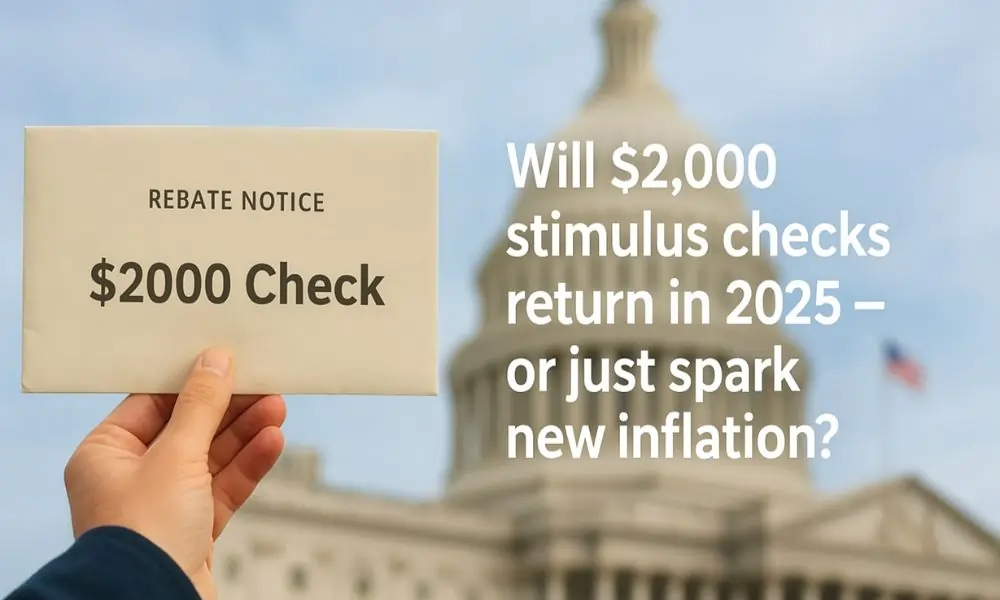
Let’s be real: when someone says “stimulus check” again, you sit up. And that’s exactly what happened when Rep. Ro Khanna (D-CA) proposed $2,000 payments for Americans earning under $100,000, arguing it would offset the burdens caused by Trump’s tariffs.
He frames tariffs as a stealth tax on everyday Americans—jacking up grocery and housing costs—and says some of that revenue should be returned.
Meanwhile, Trump has repeatedly floated rebate checks of $1,000 to $2,000, funded by tariff proceeds, calling it a “dividend to the people” during a recent OAN interview.
Why This Could Matter—and What Could Go Wrong
Pros: Stimulus, Consumer Boost, Political Appeal
- If you get $2,000, it might ease pressure from US inflation, especially on essentials like food and energy.
- More cash in hand could mean more spending: coffee in Seattle, a tank of gas in Austin, or dinner in Philly. That helps small businesses.
- From a political angle, who doesn’t want “a check for you”? It has populist appeal.
Cons: Inflation, Debt, and Distribution Headaches
- Experts warn that injecting cash—even from tariffs—can be inflationary if supply chains don’t catch up.
- The national debt is already over $36 trillion. Some Republicans oppose rebates, insisting tariff revenue should go to debt reduction.
- Who qualifies? How do you prevent fraud? Getting this passed through Congress is no small feat.
Also, Treasury Secretary Scott Bessent has suggested tariff revenue should focus first on debt reduction before any rebates.
How It Relates to US Economy, ETFs & Stocks, Job Market
- US Economy & Job Market: A well-targeted stimulus might shore up consumer confidence, bolstering hiring in retail and service sectors. But too much cash too fast could overheat the market.
- ETF vs Stocks: If consumer spending surges, sectors like consumer staples or retail stocks could outperform broad ETFs (e.g., SPDR S&P 500 ETF). But inflation fears might push investors into inflation hedges or commodities.
- Credit Cards & Household Debt: Many Americans carry credit card balances. A $2,000 infusion might allow some to pay down high-interest debt, improving their household balance sheets.
What Others Are Saying
Senator Josh Hawley introduced a related bill, offering $600 rebates per adult and dependent, funded by tariffs. That’s a smaller version of Khanna’s idea. Some GOP senators have outright rejected the rebate approach, warning it undermines fiscal prudence and could spark inflation.
Latest News / Article – Must Read
FAQ
Q1: Who would be eligible for the $2,000 payments?
Under Khanna’s proposal, individuals earning under $100,000 annually. The exact thresholds, phase-outs, and family adjustments are still TBD.
Q2: When would these checks be distributed?
If approved, it might come in late 2025 (e.g. Q4). But there’s no timetable yet—Congress must act first.
Q3: Would this really be funded by tariffs?
That’s the idea, The President and some Republicans point to rising tariff revenue as the source. But there’s debate whether that revenue is stable enough.
Q4: Could this make inflation worse?
Yes, if supply constraints persist or consumers suddenly rush to spend. Some economists fear stimulus and inflation are a tricky cocktail.
Q5: Has Congress agreed to anything like this?
No, Similar bills have been proposed (e.g. Hawley’s $600 rebate), but none have passed. The IRS confirms no new stimulus is scheduled currently.