
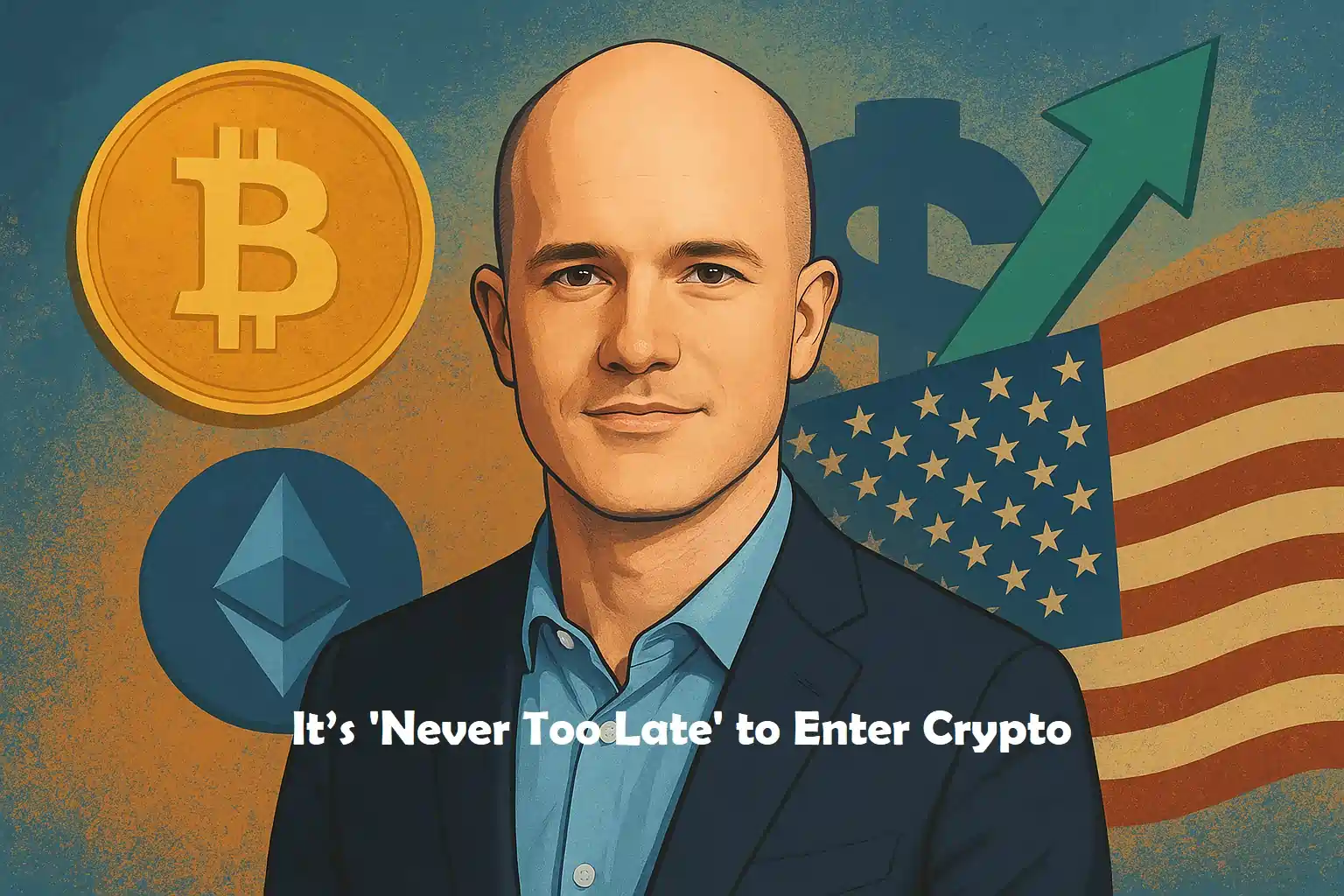
Coinbase CEO Says It’s Never Too Late: Why Crypto Still Matters for the US Economy in 2025
Quick Summary: Coinbase CEO Brian Armstrong reminds Americans that Bitcoin and Ethereum aren’t just for the wealthy—fractional investing keeps crypto accessible, shaping the future of US finance, inflation trends, and digital wealth.
The Crypto Journey: From Obscurity to Everyday Investing
Remember when Bitcoin was barely worth a pizza back in 2010? Fast forward to 2025, and we’re looking at Bitcoin trading above $110,000 and Ethereum beyond $4,000. Sounds intimidating, right? But according to Coinbase CEO Brian Armstrong, it’s not too late—and certainly not too expensive—to start your crypto journey.
Armstrong recently took to X (formerly Twitter) to bust a big myth: you don’t need to buy a full Bitcoin or ETH to invest. “You can start with just a few dollars,” he said, emphasizing fractional ownership—the same concept that lets you own a piece of a company through fractional stock investing.
Crypto and the American Wallet
Here’s where it gets interesting for the US economy and personal finance. As inflation continues to challenge everyday Americans, many are looking for assets that can outpace the dollar’s decline. Crypto, for better or worse, has become part of that conversation.
Over the past few years, institutions like MicroStrategy and BlackRock have poured billions into Bitcoin. Yet, Armstrong insists it’s not just a game for Wall Street giants—Main Street investors can get in too. Even with $100, you can own a slice of BTC or ETH. And who knows? Ten years from now, that small slice could grow into something meaningful.
The Future: $1 Million Bitcoin?
Armstrong’s bold prediction? Bitcoin could hit $1 million by the end of the decade—driven by clearer regulations and rising institutional trust. Sounds wild, but hey, so did the idea of digital currency twenty years ago.
And let’s be real—crypto isn’t just an investment anymore; it’s a statement about how Americans view freedom, finance, and innovation. In cities like New York, Austin, and Miami, small businesses now accept crypto payments. Some folks even get paid in Bitcoin. Crazy? Maybe. But it’s happening.
Crypto’s Ripple Effect on US Markets
Crypto isn’t an isolated bubble anymore—it’s influencing the US stock market, tech innovation, and inflation narratives. When Bitcoin rallies, risk appetite in equities often follows. And as the Federal Reserve navigates inflation control, investors see crypto as both a hedge and a high-risk adventure.
Armstrong’s message is clear: whether you’re an average saver in Chicago or a Wall Street trader in Manhattan—it’s not too late to learn, explore, and maybe own a tiny piece of the crypto world.
Key Takeaway
Crypto is no longer a secret club for the rich. It’s an evolving part of the American financial identity, tied deeply to the nation’s economic resilience, innovation, and belief in second chances.
Recent News Article – Must Read
FAQs
Q1. Is it too late to invest in Bitcoin or Ethereum?
No, You can start with just a few dollars. Fractional investing means you don’t need to buy a full coin.
Q2. How does crypto affect the US economy?
Crypto influences market liquidity, drives innovation in fintech, and offers an alternative asset during inflationary periods.
Q3. Can crypto protect Americans from inflation?
While volatile, crypto has shown potential as a hedge during high inflation when the dollar weakens—though it’s not a guaranteed safeguard.
Q4. What’s Brian Armstrong’s prediction for Bitcoin?
He believes Bitcoin could hit $1 million by the end of the decade, citing institutional adoption and regulatory clarity.
Q5. Should beginners start with Bitcoin or altcoins?
Experts suggest starting with established assets like Bitcoin or Ethereum before exploring altcoins, which are riskier and more volatile.