Federal Reserve Interest Rate Decision – Explained in Simple Words
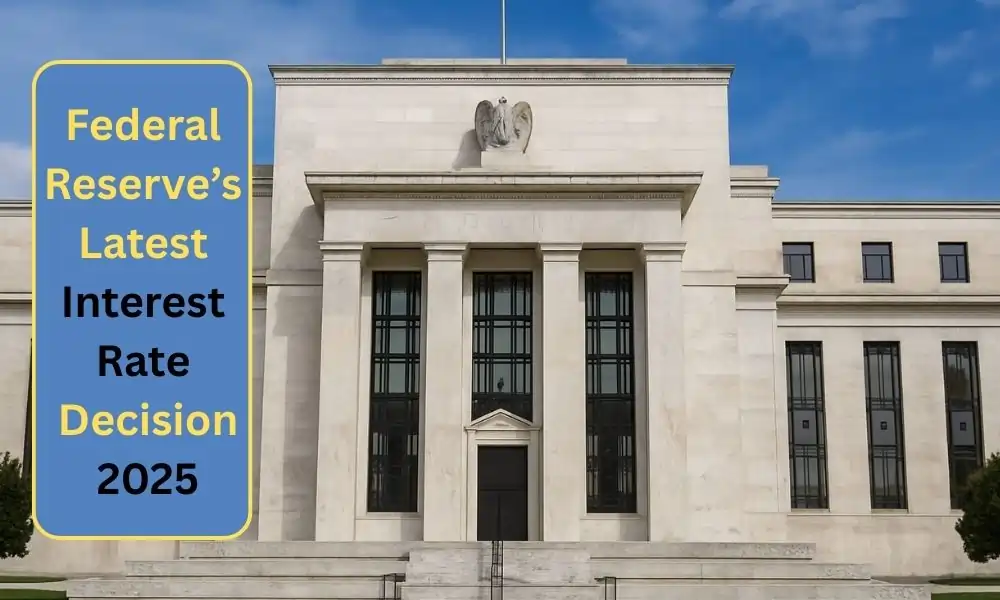
Federal Reserve Interest Rate Decision. Whenever the Federal Reserve (the Fed) announces a decision about interest rates, financial markets jump, news anchors get busy, and ordinary Americans hear about it in headlines. But what does it really mean for your wallet, loans, savings, and daily life?
In 2025, the Fed’s interest rate moves are more important than ever. Inflation has cooled from the highs, we saw in 2022–23, but the U.S. economy is still trying to balance between stable prices and steady growth. For regular people, these decisions affect mortgages, credit cards, car loans, savings accounts, and even job markets.
In this article, let’s break down the Federal Reserve’s latest interest rate decision in simple words, and understand how it impacts you.
What Did the Federal Reserve Decide, to maintain high Interest Rate?
In its latest policy meeting, the Federal Reserve decided to hold interest rates steady after a series of hikes that started in 2022. Right now, the Fed’s benchmark rate is hovering around 5.25% to 5.50%, the highest in more than two decades.
The Fed says inflation has slowed, but it hasn’t yet returned to its 2% target. At the same time, the job market is still relatively strong. By keeping rates high, the Fed wants to ensure inflation keeps moving down without pushing the economy into a deep recession.
What Does the Interest Rate Mean in Simple Words for General Public?
Think of the Fed’s interest rate like the price of money.
- When rates are low, borrowing is cheaper. People take more loans, businesses expand, and the economy grows faster.
- When rates are high, borrowing is more expensive. People spend less, businesses slow hiring, and inflation cools down.
The Fed is basically adjusting a financial thermostat—turning it up or down depending on whether the economy feels too hot (inflation) or too cold (recession risks).
How Does Interest Rate Decision Affect Your Daily Life?
The Fed’s decisions trickle down into almost every corner of American households. Here’s how:
- Mortgages and Home Buying
Mortgage rates for a 30-year fixed loan are currently around 6.5–7%. This makes monthly payments higher and slows down the housing market. Many first-time buyers are waiting, hoping rates come down in the future. - Credit Cards and Personal Loans
If you carry credit card debt, you’re paying more interest than before. Average APRs are above 20%, making it expensive to keep balances. - Auto Loans
Buying a car on financing has also become costly, as auto loan rates climbed past 7%. - Savings Accounts & CDs
The good news: higher Fed rates mean banks are offering better returns on savings accounts and certificates of deposit (CDs). Many high-yield savings accounts now pay over 4–5% APY. - Job Market
Businesses slow down hiring when borrowing is costly. While unemployment is still low, certain sectors like tech and real estate have seen layoffs.
Why Did the Federal Reserve System Make This Decision?
The Fed has two main jobs:
- Keep prices stable (control inflation)
- Support maximum employment (jobs)
Right now:
- Inflation is still higher than the 2% target but much lower than 2022.
- The economy is not in recession, but growth is slower.
By keeping rates steady, the Fed wants to:
- Avoid reigniting inflation by cutting rates too soon.
- Monitor the economy before making the next big move.
What Could Happen Next by Federal Reserve Decision?
Experts see three possible paths for the rest of 2025:
- Rates Stay High
If inflation remains sticky, expect the Fed to keep rates at current levels longer. - Gradual Rate Cuts
If inflation cools further and unemployment rises, the Fed may cut rates slowly to support growth. - Unexpected Hikes
If inflation picks up again due to global oil prices, supply chain issues, or strong consumer spending, the Fed could raise rates again.
Smart Money Moves for Americans in 2025
Here are some practical steps to navigate the current rate environment:
- Pay down High-Interest Debt: Clear & Pay credit card balances as fast as possible.
- Lock in Savings Rates: Use CDs or high-yield savings accounts to benefit from higher interest.
- Be Cautious with Loans: Avoid unnecessary borrowing until rates come down.
- Invest for the Long Term: Index funds, dividend stocks, and Treasury bonds remain good options.
- Build Emergency Funds: 3–6 months of expenses in liquid accounts protect against job uncertainty.
Conclusion
The Federal Reserve’s interest rate decisions might sound complicated, but in simple terms:
- Borrowing is more expensive (loans, mortgages, credit cards).
- Saving is more rewarding (HYSAs, CDs, Treasury bonds).
- The Fed is trying to balance inflation and jobs without tipping the economy into a recession.
For everyday Americans, the smart approach in 2025 is to manage debt wisely, take advantage of higher savings yields, and be cautious about big borrowing decisions until the economic path is clearer.
References
- Federal Reserve – Monetary Policy Decisions
- U.S. Inflation & Economic Data – Bureau of Labor Statistics
- Federal Funds Rate – Trading Economics
- Mortgage Rates & Economic Trends – Freddie Mac
Related Topic – Must Read
FAQs – Federal Reserve Latest Interest Rate Decision.
Q1. Why does the Federal Reserve System (Fed) raise or cut interest rates?
To balance the economy—raising rates to control inflation, cutting them to encourage growth.
Q2. Will mortgage rates go down in 2025?
They may ease if the Fed cuts rates later in the year, but experts don’t expect a return to ultra-low pandemic-era rates anytime soon.
Q3. How do Fed rate hikes affect my credit card bill?
Credit card APRs rise, meaning if you carry a balance, you’ll pay more interest. Paying off debt faster saves money.
Q4. Is this good news for savers?
Yes, Higher Fed rates mean banks offer better interest on savings accounts and CDs, helping savers earn more.
Q5. Could the Fed’s decision cause a recession?
If rates stay high too long, it could slow down business investment and hiring. The Fed is trying to avoid that while still fighting inflation.