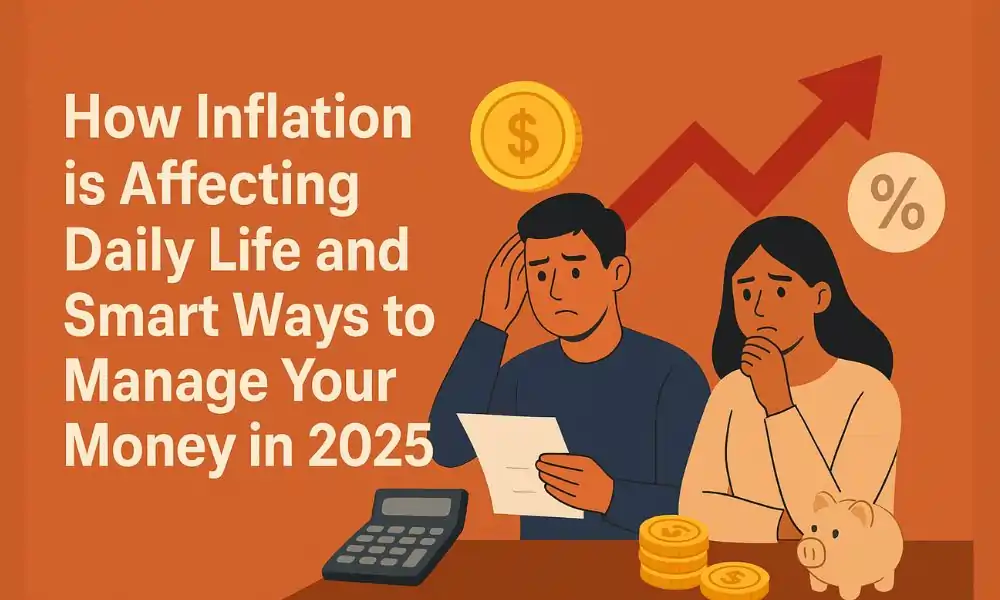
How Inflation is Affecting Daily Life – Smart Ways to Manage Your Money in 2025
How Inflation is affecting daily life. Inflation is one of those economic terms that we often hear in news headlines, but for most Americans, it’s not just a word—it’s something we feel every time we go grocery shopping, pay rent, or fill up at the gas station.
In 2025, inflation remains a major concern in the United States. While it has eased compared to the post-pandemic spike in 2022, the cost of living is still higher than what many households were used to just a few years ago. Families are adjusting their budgets, businesses are rethinking pricing, and policymakers are trying to keep the economy stable.
In this article, let’s take a closer look at how inflation is shaping daily life in the U.S. right now, and explore some smart and practical ways you can protect your money, stretch your budget, and invest wisely.
Let’s Understand the Current U.S. Economic Scenario in 2025
After the pandemic recovery years, the U.S. economy entered a cycle of high demand, supply chain disruptions, and rising wages—all of which pushed inflation upward. The Federal Reserve responded by increasing interest rates to bring inflation under control.
While inflation has slowed down compared to its peak, many prices remain “sticky”—they don’t go back to pre-2020 levels. Here’s how it looks in 2025:
- Grocery Prices: Everyday essentials like eggs, milk, bread, and fresh produce are still significantly more expensive than in 2019.
- Housing & Rent: Rent in major cities like New York, San Francisco, and Miami continues to climb, making housing affordability a key issue.
- Gas & Transportation: Fuel prices remain unpredictable, which impacts not only commuters but also the cost of shipped goods.
- Healthcare & Education: Insurance premiums, medical bills, and tuition fees are outpacing wage growth, putting extra pressure on middle-class households.
The result is simple: many Americans feel their paycheck isn’t stretching as far as it used to.
Do You Know ? How Inflation is Affecting Daily Life
Inflation is more than just numbers—it changes the way people live and plan for the future. Here’s how it’s playing out in American households in 2025:
- Household Budgets Are Tight
Families are cutting back on dining out, streaming subscriptions, and discretionary shopping just to manage basic expenses. - Savings Lose Purchasing Power
Money sitting in a regular checking or savings account isn’t keeping up with inflation. If inflation is 4% but your bank pays only 0.5% interest, your dollars are shrinking in real value. - Loans and Credit Are More Expensive
With higher interest rates, mortgages, auto loans, and credit card balances are costing more. The 30-year fixed mortgage rate, for example, has been hovering around 6–7%. - Shifts in Investments
Americans are moving away from speculative assets and focusing more on index funds, dividend-paying stocks, and Treasury bonds. Safe and inflation-protected assets are gaining popularity. - Lifestyle Adjustments
Vacations are planned closer to home, more people are cooking instead of eating out, and shoppers are seeking discounts, coupons, and bulk deals.
Smart Ways to Manage Your Money in 2025
Inflation is a reality, but you can fight back with smart money habits. Here are some actionable steps for U.S. households in today’s environment:
1. Rebuild and Adjust Your Budget:- Budgeting tips for Americans in 2025
Go line by line on your expenses. Track your spending through apps like Mint or YNAB (You Need A Budget). Cut unnecessary costs—unused subscriptions, impulse purchases, or eating out too often.
2. Strengthen Your Emergency Savings:- Emergency fund savings in the U.S.
Unexpected medical bills, car repairs, or job changes can be devastating without a safety net. Aim for 3–6 months of living expenses in a high-yield savings account (many now offer over 4% APY).
3. Invest to Beat Inflation:- Best investments in the USA 2025.
To protect your money’s value, consider:
- Index Funds & ETFs: Long-term, low-cost investments that track the stock market.
- Treasury Inflation-Protected Securities (TIPS): Government bonds designed to rise with inflation.
- Dividend Stocks: Reliable companies that pay consistent dividends.
- Gold & Real Assets: A hedge against economic uncertainty.
A balanced portfolio ensures you’re not losing ground as prices rise.
4. Tackle High-Interest Debt:- Debt management strategies U.S.
Credit card APRs are above 20% for many Americans. If you carry balances, inflation makes it even harder to pay them off. Focus on clearing high-interest debt first or consider a balance transfer with lower rates.
5. Boost Your Income with Side Hustles:- Best side hustles in America 2025
Relying on one paycheck feels risky in today’s economy. Explore side hustles like:
- Freelancing (writing, design, programming)
- Selling products online through Amazon, Etsy, or Shopify
- Rideshare or delivery apps (Uber, DoorDash)
- Remote consulting or tutoring
Even an extra $500 a month can make a big difference in savings or investments.
6. Shop Smarter: – How Americans can save money on daily expenses
How inflation is affecting daily life, that is why few smart ways to shoping.
- Use cashback credit cards for essential purchases (and pay them off monthly).
- Buy in bulk at stores like Costco or Sam’s Club.
- Use apps for discounts and coupons.
- Choose energy-efficient appliances to lower monthly utility bills.
Inflation Isn’t Always Negative
While inflation feels painful, a moderate level shows that the economy is active. Businesses see growth, wages rise for many sectors, and investors can still find opportunities. The challenge for households is not to fear inflation but to adapt smartly.
By controlling debt, focusing on inflation-proof investments, and developing multiple income sources, Americans can still build wealth despite rising costs.
References
- Current U.S. Inflation Rates & Breakdown – USAFacts / BLS Data
- Tariffs and Their Impact on Consumer Prices – Yale Budget Lab
- Housing, Food, and Energy Inflation Trends – NCH Stats
- Monthly & Annual Inflation Nowcasting – Cleveland Fed
- Practical Tips to Limit Inflation’s Impact – BankSouthern
Conclusion
How Inflation is affecting daily life. Inflation in 2025 continues to impact the lives of millions of Americans. Groceries, housing, healthcare, and education are more expensive, while higher interest rates make borrowing costlier. But with the right approach—budgeting wisely, strengthening emergency savings, paying down debt, and investing smartly—you can navigate this economic environment with confidence.
Remember: financial security is less about predicting the future and more about preparing for it. The sooner you adapt, the stronger your money will work for you in 2025 and beyond.
Related Topic – Must Read
FAQs – How Inflation is affecting Daily Life
What is the current inflation rate in the U.S. in 2025?
As of 2025, U.S. inflation has slowed compared to its peak in 2022, but it still remains above the Federal Reserve’s long-term target of 2%. On average, the inflation rate is hovering around 3–4%, which means prices are still rising, just at a slower pace than before.
Why do groceries and rent feel more expensive even if inflation is coming down?
Inflation measures how quickly prices are rising, not whether they are falling. Even though inflation has cooled, prices that went up in past years rarely return to old levels. That’s why groceries, rent, and gas still feel costly—they’re now “the new normal.”
How can I protect my savings from inflation?
Keeping money in a regular checking or savings account isn’t enough because inflation erodes its value. Instead:
1. Use a high-yield savings account (HYSA)
2. Invest in index funds, ETFs, or dividend stocks
3. Consider Treasury Inflation-Protected Securities (TIPS) for safe inflation-adjusted returns
Are higher interest rates good or bad for me?
It depends:
Good: Savers benefit because banks offer higher interest on savings accounts and CDs.
Bad: Borrowers face higher costs for mortgages, auto loans, and credit card debt.
That’s why it’s wise to reduce debt and shift extra money into higher-yield savings.
What are some smart ways to cut daily expenses in 2025?
1. Shop at wholesale stores like Costco or Sam’s Club
2. Use cashback apps and credit cards responsibly
3. Cook at home instead of eating out
4. Cancel unused subscriptions
5. Buy energy-efficient appliances to lower utility bills
What are the safest investments during inflation?
Some of the safest options for U.S. investors in 2025 include:
1. Treasury Inflation-Protected Securities (TIPS)
2. Certificates of Deposit (CDs) and high-yield savings accounts
3. Gold and other commodities
4. Low-cost index funds for long-term growth
How much should I keep in an emergency fund?
Financial experts recommend keeping at least 3 to 6 months of living expenses in a liquid, easy-to-access account. This helps cover unexpected costs like job loss, medical bills, or major repairs without going into debt.
What side hustles are popular in the U.S. right now?
Some trending side hustles in 2025 include:
1. Freelancing (writing, graphic design, coding)
2. Selling on platforms like Etsy, Amazon, or Shopify
3. Driving for rideshare apps like Uber and Lyft
4. Delivery services like DoorDash and Instacart
5. Remote tutoring or consulting in your field