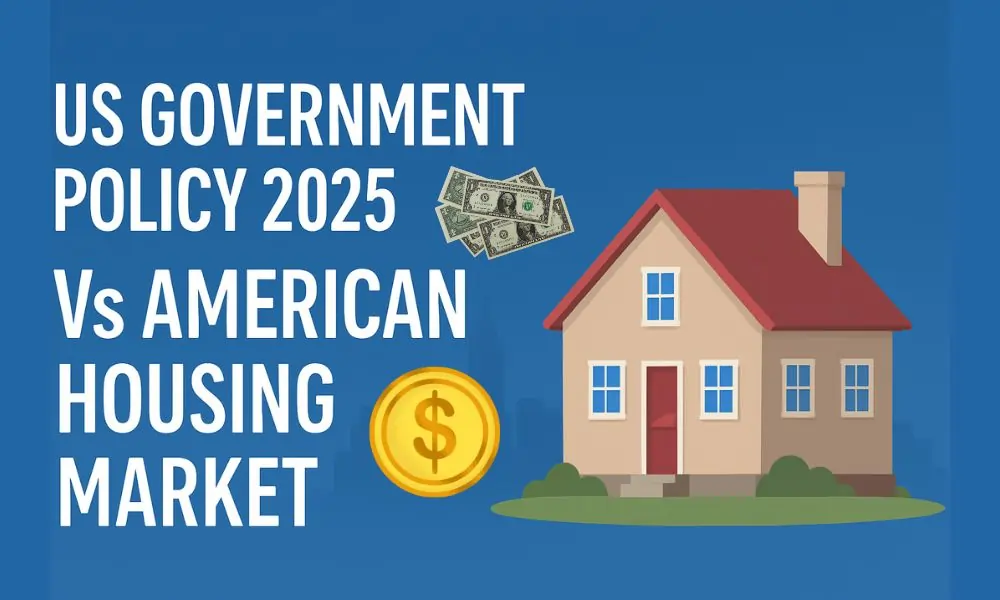
How US Government Policy is Shaping the US Housing Market 2025
Introduction: US Housing Market Outlook 2025
Evolving government policies are reshaping the US housing market 2025, creating both opportunities and new struggles for Americans pursuing the dream of homeownership.
Progressive Steps Taken by the US Government in 2025 Housing Policy
This year, the federal government has made housing affordability a top priority. Lawmakers have expanded down payment assistance programs, boosted tax credits for first-time buyers, and introduced FHA and HUD pilot initiatives to simplify loan access. These steps are designed to reduce financial strain on middle-class families while helping younger Americans overcome barriers to ownership. For many, these changes are seen as a lifeline in a market that often feels out of reach.
Current Scenario of the US Housing Market in 2025
The US housing market 2025 remains a landscape of contrasts. While prices continue to climb, mortgage rates have begun to ease slightly. Sales of previously owned homes are at their lowest in decades, and affordability has become the central concern for families. On one hand, homeowners with equity feel secure. On the other, aspiring buyers face the harsh reality of limited supply and steep competition.
Ratio and Percentage of Americans Without Home Ownership in 2025
The U.S. homeownership rate has slipped to 65% in mid-2025, marking its lowest level since 2019. That means 35% of Americans currently live in rented properties or alternative housing. Younger generations are especially impacted: only 36.4% of adults under 35 own a home. Rising student debt, high interest rates, and wages that lag behind inflation have made homeownership feel more like a dream than a goal for many.
Average Housing Prices in the US by Region and State
Nationally, the median existing single-family home price has climbed to around $412,500. The Northeast leads with nearly 7% annual growth, while the Midwest shows steady gains of about 5%. The South and West continue to grow, though at slower paces.
In large cities, the differences are striking. A home in Rochester, New York, averages around $254,000, while in San Francisco or San Jose, prices soar well above $1.1 million. These wide gaps reveal why affordability varies so dramatically depending on where you live.
Can Migrants Afford to Buy a Home in America in 2025?
For many migrants, buying a home in the United States remains difficult but not impossible. The biggest hurdles include strict credit checks, limited savings for down payments, and higher entry-level housing costs in most urban areas. Still, community lending programs, government-backed loans, and local housing assistance offer new opportunities. Migrants with steady employment and strong financial planning can still find a path to ownership, particularly in more affordable states.
Cheapest Geographical Areas to Buy a House in the US
Affordability often depends on where you choose to settle. Cities like Rochester and Syracuse in New York, as well as several markets in Ohio and Michigan, still offer homes below $300,000. These areas provide a realistic chance for middle-income families and migrants to achieve homeownership. By contrast, coastal regions and tech hubs remain out of reach for most first-time buyers.
Smart Money Habits to Afford a Home in the American Housing Market
- Save aggressively for a down payment – every additional dollar can lower your interest rate and monthly burden.
- Cut high-interest debt first – reducing credit card balances boosts your mortgage eligibility.
- Consider alternative income sources – side hustles and gig work can strengthen your financial profile.
- Budget beyond the mortgage – remember property taxes, insurance, and upkeep costs.
- Use government or nonprofit aid programs – explore state and city grants that help first-time buyers.
- Stay patient and flexible – waiting for favorable interest rate drops or exploring smaller markets can make ownership possible.
Conclusion: Future of the US Housing Market in 2025
The US housing market 2025 is shaped by both challenge and possibility. Prices remain high, but government reforms and strategic money habits can help more Americans achieve ownership. While obstacles exist, opportunities are emerging for families willing to plan smartly, save consistently, and consider new housing markets. The dream of owning a home is still alive—it just takes more resilience and creativity in today’s environment.
References
- US Homeownership Rate and Vacancy Data – U.S. Census & FRED
- Harvard JCHS – State of the Nation’s Housing 2025
- SmartAsset – Homeownership Rates 2025 Study
- Barron’s – Why Some Buyers Delay Homeownership
- Financial Times – Home Equity and HELOC Trends
Related Post – Must Read
FAQ – US Housing Market 2025
Q1. What factors are influencing the US housing market in 2025?
High home prices, mortgage rates, limited supply, and new government policies are the main drivers. These factors combine to create both challenges and opportunities for buyers.
Q2. Have homeownership rates fallen in 2025?
Yes, the national homeownership rate is now 65%. This is the lowest in years, reflecting affordability struggles that impact younger Americans and renters most.
Q3. Are home prices still soaring in 2025?
Prices continue to rise nationally. The median value of a home is over $412,000, though growth varies by region. Some metros see sharp increases, while others slow down.
Q4. Which U.S. regions offer more affordable homes?
The Midwest and parts of the Northeast, such as Rochester and Syracuse, remain affordable. These areas typically offer lower prices and better ownership opportunities.
Q5. Can migrants buy a home easily in 2025?
Buying a home as a migrant is still difficult, but local and federal programs provide assistance. Strong credit, savings, and good financial habits improve chances.
Q6. Is home equity a resource for homeowners in 2025?
Yes. Many long-time homeowners own property outright or have large equity cushions. Home equity loans and HELOCs are being used to fund education and renovations.
Q7. Will mortgage rates fall in 2025?
Rates have eased slightly but remain higher than pre-pandemic averages. A gradual downward trend is expected, but affordability relief is still limited for most buyers.
Q8. What government help exists for first-time buyers in 2025?
Expanded tax credits, FHA loan programs, and local assistance grants are available. These help reduce upfront costs and make mortgages more accessible for first-time buyers.
Q9. How can I track affordable housing areas?
Keep an eye on quarterly housing reports, state affordability indexes, and nonprofit studies. They provide clear insights on which cities and regions remain within reach.
Q10. What’s the best smart money habit to buy a home?
The single best habit is saving a larger down payment while reducing debt. This gives you better loan options, lower payments, and stronger financial security.