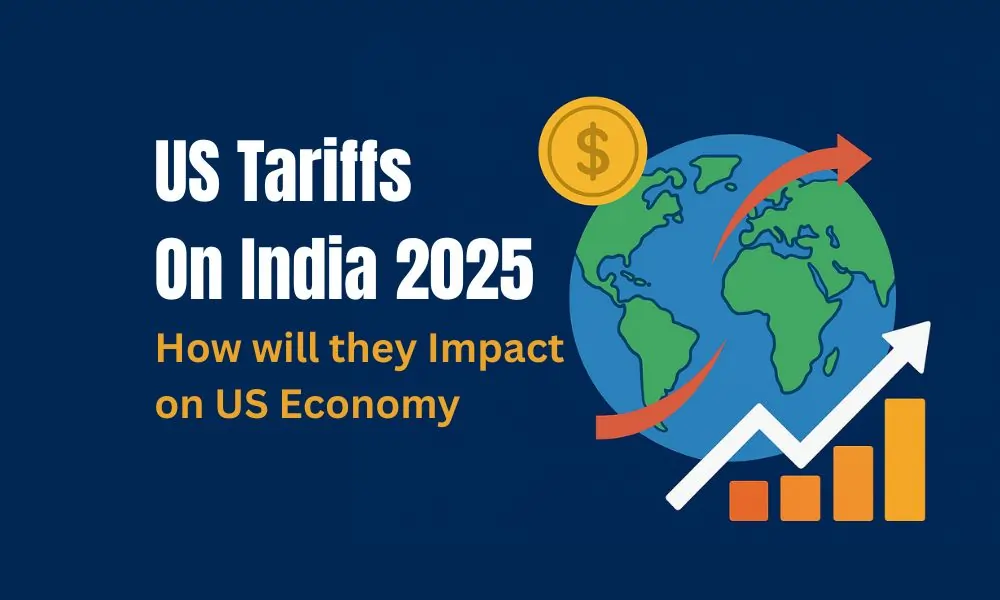
US Tariffs on India 2025: How Will They Impact the US Economy?
Introduction: What US Tariffs on India 2025 Mean for Trade Relations
The United States and India are among the world’s largest economies. In 2025, with US tariffs on India being raised, trade relations have entered a tense phase. Tariffs are meant to protect American industries, but they often spark retaliation, disrupt global supply chains, and create uncertainty for businesses.
For American readers, the key question is: will these tariffs truly protect US workers, or could they backfire on the economy?
Quick Summary:- The US tariffs on India 2025 are reshaping trade relations between the two nations. While tariffs may protect certain US industries, they also risk raising consumer prices, impacting Wall Street, and straining supply chains tied to Indian manufacturing. This article explores whether these tariffs strengthen or hurt the US economy.
US Tariffs on India 2025 and Their Impact on the Stock Market
Wall Street reacts quickly to trade news. In 2025, the announcement of higher US tariffs on India triggered volatility in sectors like technology, retail, and manufacturing.
- Tech stocks dipped because many US companies depend on affordable Indian software and IT services.
- Consumer goods companies worried about higher import costs.
- Industrial firms braced for disrupted supply chains.
For investors, the big concern is whether tariffs will increase inflationary pressures and reduce corporate earnings.
How US Tariffs on India 2025 Could Affect the Overall US Economy
The broader impact of tariffs on the US economy is mixed. On one side, tariffs can encourage local production. On the other, they often raise costs for businesses and consumers.
Key effects include:
- Higher consumer prices on everyday goods.
- Reduced competitiveness of US exporters if India retaliates with its own tariffs.
- Potential inflation pressure as costs ripple through the supply chain.
In the long run, tariffs could slow down growth if they spark a trade dispute.
Could US Tariffs on India 2025 Backfire on the US Economy?
The question many economists ask: Are these tariffs really helping, or hurting?
- Short-term benefit: Protects US industries like textiles and steel from cheaper Indian imports.
- Long-term risk: US companies that rely on Indian components may lose their cost advantage.
- Backfire scenario: If tariffs cause India to cut imports of US agricultural goods or services, American farmers and service providers could suffer.
This is where the debate lies — tariffs may sound protective, but they could harm American workers in other industries.
The Role of Indian Manufacturing in the US Economy
Indian manufacturing plays a significant role in US supply chains. From pharmaceuticals to auto parts, India supplies essential products that Americans rely on daily.
- Around 40% of generic medicines in the US come from India.
- Indian textiles and apparel fill a large share of US retail shelves.
- Auto components and electronics imported from India keep American factories running.
Tariffs on these goods could raise costs for healthcare, clothing, and vehicles in the US market.
India–Russia Relations and Their Effect on the US Market
In 2025, India–Russia relations add another layer of complexity. India’s closer ties with Russia in energy and defense create ripple effects in global trade.
For the US, this matters because:
- Stronger India–Russia trade may reduce India’s reliance on US imports.
- US sanctions on Russia could clash with India’s policies, deepening trade friction.
- Investors in the US market may see increased volatility as global alliances shift.
Will the US Reduce Tariffs on India After 2025?
One big question is whether these tariffs will remain permanent. US trade policy in 2025 is under debate in Congress and among presidential candidates.
Possible outcomes:
- Gradual easing if negotiations with India move forward.
- Further increases if political pressure demands stronger protection for US industries.
- Sector-based adjustments where tariffs stay high on some goods but ease on essentials like medicine or technology.
For American businesses, clarity on tariff policy will be crucial to plan future investments.
Conclusion: US Tariffs on India 2025 and the Future of US–India Trade
The US tariffs on India 2025 highlight the challenges of balancing protection with growth. While the move may safeguard certain US industries, it risks raising prices for consumers, sparking retaliation, and slowing economic momentum.
The future of US–India trade will depend on whether both nations choose cooperation or confrontation. For the US economy, the real test will be finding a balance between protecting jobs and keeping global trade flowing.
References
- U.S. International Trade Commission – Tariff Data
- World Bank – Global Trade Outlook
- Office of the United States Trade Representative
- Reuters – US–India Trade News
- Bloomberg – Global Economy Updates
Related Article – Must Read
Disclaimer
This is an educational and informational article. It does not promote or endorse any bank, finance agency, investment platform, or government policy. Readers should use this content for general knowledge and not consider it as financial or investment advice.
FAQ – US Tariffs on India 2025
Q1. Why did the US increase tariffs on India in 2025?
The US raised tariffs to protect domestic industries and reduce dependency on low-cost imports. However, the move has sparked debate on whether it helps or hurts the overall economy.
Q2. Which US industries are most affected by tariffs on India?
Technology, pharmaceuticals, textiles, and auto manufacturing are among the most affected sectors. Many rely heavily on Indian imports.
Q3. How do tariffs on India affect American consumers?
Tariffs typically raise the price of imported goods. This means higher costs for everyday items like medicine, clothing, and electronics.
Q4. Can tariffs create jobs in the US?
Yes, in certain protected industries, tariffs may boost local hiring. However, higher production costs could also reduce jobs in other sectors.
Q5. How does Wall Street react to US tariffs on India?
The stock market often becomes volatile. Investors worry about inflation, lower corporate profits, and potential trade retaliation.
Q6. Could India retaliate against US tariffs?
Yes, India may raise tariffs on US agricultural goods, energy imports, or services. This could directly hurt American farmers and businesses.
Q7. What role does Indian manufacturing play in the US economy?
Indian manufacturing supports critical US industries, especially pharmaceuticals and consumer goods. Without it, costs for American households could rise significantly.
Q8. How do India–Russia relations complicate US trade policy?
India’s ties with Russia, particularly in energy and defense, create friction with US sanctions policies. This could make tariff negotiations more complex.
Q9. Are these tariffs permanent?
Not necessarily. US tariffs on India in 2025 could be adjusted depending on political negotiations, economic impact, and diplomatic relations.
Q10. What should US investors watch in 2025 regarding tariffs?
Investors should monitor tariff talks, inflation trends, and supply chain disruptions. These factors directly influence stock market performance.