Trump’s 25% Truck Import Tariff Set to Hit U.S. Economy from November 1, 2025
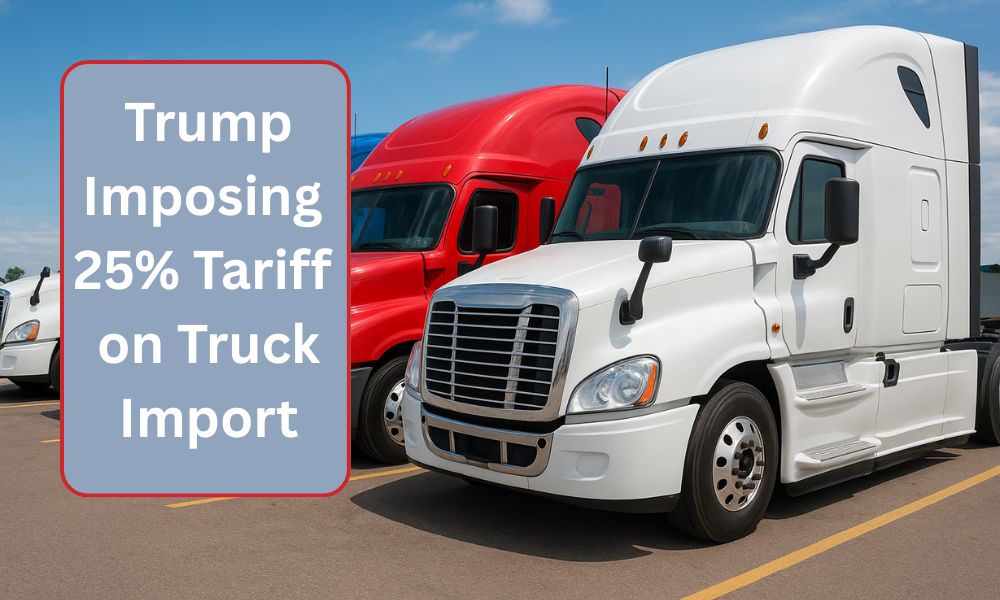
Quick Summary: Starting November 1, 2025, President Trump will impose a 25% tariff on medium and heavy trucks imported into the U.S., aiming to protect domestic manufacturing and reshape supply chains.
In a surprise move on October 6, 2025, President Donald Trump announced that beginning November 1, all medium- and heavy-duty trucks imported into the United States will face a 25% tariff. He posted the declaration on Truth Social, framing it as a measure to support U.S. manufacturers and better defend against “unfair outside competition.”
This isn’t just about big rigs; the move signals a deeper pivot in Trump’s trade agenda — using national security arguments (via Section 232) to push tariffs on critical industrial imports.
What This Means for the U.S. Economy & Business
Inflation pressure & cost hikes
Importers warn the tariff will push up truck prices by tens of thousands of dollars per unit. For fleets, logistics firms, and construction companies in cities like Houston, Chicago, or Los Angeles, that’s a serious cost shock. Increased equipment costs often ripple downstream — expect higher costs for goods, transport, and infrastructure projects.
Supply chain reshuffling
OEMs (original equipment manufacturers) heavily reliant on cross-border part flows (especially via Mexico and Canada) will scramble to localize assembly or shift sourcing — or risk paying the penalty.
Domestic winners (and losers)
U.S. truck makers like Paccar’s Peterbilt and Kenworth, or Freightliner (which manufacture much domestically), might get a boost. But foreign automakers exporting heavy trucks — especially from Mexico, Germany, Finland, or Japan — could see their competitiveness eroded.
Trade tensions surge
Some importing countries — allies even — are balking. The U.S. Chamber of Commerce has warned of backlash, noting many of the top exporters are Canada, Mexico, Japan, Germany, and Finland. Pressure is building for carve-outs or negotiations, especially under USMCA rules.
Reaction: Importers, Manufacturers & Trump’s View
- Importers & fleets: They’re pushing back hard. Some say the tariff is too blunt, likely to hurt small businesses and raise prices for consumers.
- Foreign manufacturers: Lobbying heavily for exemptions. Stellantis, Volvo, Daimler and others reportedly plan formal appeals, especially for Mexico-produced vehicles.
- Domestic OEMs: Mixed. Domestic-heavy companies welcome protection. Others worry about retaliation or disruption in parts supply chains.
- Trump’s rationale: He frames this as a job-protection, industrial revival, and national security move. He argues the U.S. has been shortchanged by unfair global trade practices.
In his words: “Beginning November 1st, 2025, all Medium and Heavy Duty Trucks coming into the United States … will be tariff at the rate of 25%.”
FAQs
Q1. Why medium and heavy trucks? Why not cars?
The administration says trucks are more crucial to industrial and construction supply chains, making them fair targets under national security arguments. Light vehicles already carry 15% tariffs under existing trade accords.
Q2. Will USMCA or trade agreements protect some trucks from the tariff?
Possibly, Trucks that meet high North American content thresholds may be exempt (or face lowered rates). But the rulebook is complex and will likely require detailed auditing of parts origin.
Q3. When will we see price increases for end users?
Almost immediately — ordering cycles for fleets and heavy machinery are fast. Expect sticker shock in the next few months, especially in sectors like construction, waste management, and transit.
Q4. Could this spark retaliation or a broader trade war?
Yes, Countries affected (Canada, Mexico, Germany, Japan) could respond with counter-tariffs or WTO challenges — further unsettling global trade.
Q5. Is there a chance the tariff won’t stick? Legal or political pushback?
Absolutely, Importers may file legal challenges, Congress or courts may limit scope, and diplomatic pressure could force amendments or exemptions. The law is murky on how far a president can invoke national security-based tariffs.