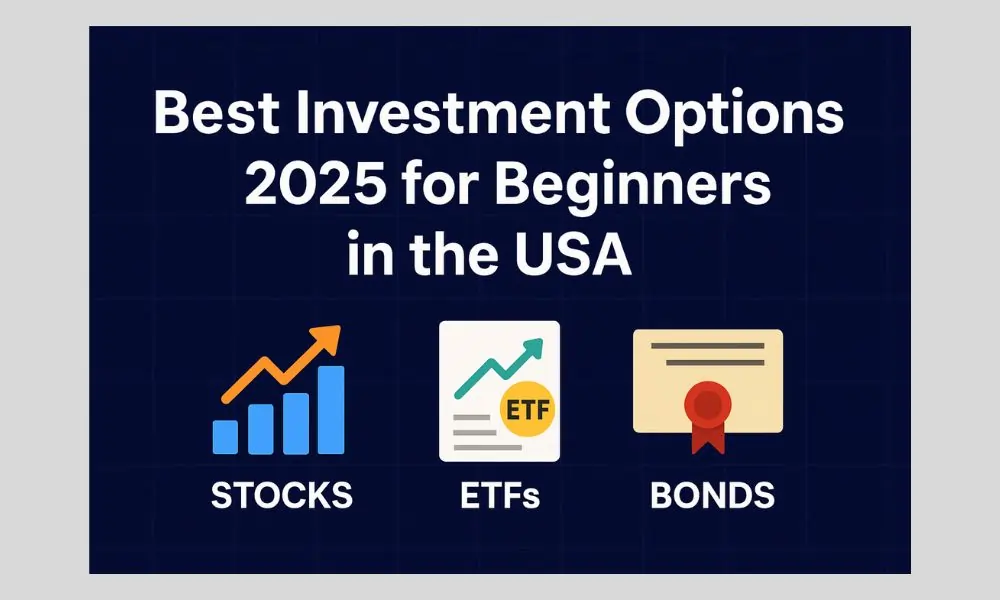
Best Investment Options in 2025 for Beginners in USA – (Stocks, ETFs, Bonds)
Best Investment Options in 2025 for Beginners in USA, I think you were waiting of this article.
Hello there! If you’ve ever wondered how to dip your toes into investing without diving into complicated jargon, you’re in the right place. In this article, we’ll walk through three beginner-friendly investment options for 2025—stocks, ETFs, and bonds—that make sense for U.S. investors. We’ll also peek at what’s happening in the economy right now to give you some real-world context.
A Quick Look at the Current U.S. Economy
Right now, the U.S. economy is doing a bit of a balancing act. In Q2 2025, GDP rose at an annualized 3.0%, rebounding from a dip earlier in the year—good news for folks like you and me! Consumer spending picked up, inflation cooled a bit, and job markets stayed strong, with unemployment hovering around 4%.
That said, there are clouds on the horizon—like tariffs and trade issues—that could slow things down later in 2025. So it’s smart to invest with both optimism and caution.
Why Begin with Stocks, ETFs, or Bonds?
These investments offer:
- Easy access to participate and small investment.
- Flexibility to match your comfort level.
- A chance to build wealth slowly but steadily.
Let’s make & keep it simple and friendly to understand.
1. Stocks – Stocks provide you Owning Small Pieces of Companies
Stocks are shares—tiny parts of companies like Apple, Nike, or Tesla. Think of buying stock like owning a slice of your favorite pizza joint. When the company does well, you share in the profits (via growth or dividends).
What’s New in 2025?
- Even though markets are near record highs, not everything is smooth sailing—some experts warn the stock market may not fully reflect real economic challenges, like tariffs and slower growth.
- S&P 500 is expected to end 2025 a bit lower due to trade concerns and rate uncertainty.
- Small-cap stocks (smaller companies) are looking interesting—they’re about 40% undervalued compared to bigger companies, offering room for growth.
Beginner Tips:
- Start small. Invest in companies you know and trust.
- Look at dividend stocks or well-known tech firms—like those in the S&P 500—because they’re more stable.
- Limit risk. It’s wise not to put 100% of your money into a single stock.
2. ETFs (Exchange-Traded Funds) – One Ticket to Many Investments
ETFs are like baskets of stocks or bonds. You buy one “basket” and get instant diversity—like a fruit basket instead of just an apple.
What’s Popular in 2025?
- Bond and stock ETFs help you mix things up—Fidelity describes ETFs as easy-to-buy funds, sometimes tracking indexes like the S&P 500 or Nasdaq.
- For rebalancing your portfolio, there are “great ETFs” that help simplifying things—Morningstar highlights them for 2025.
- Bond ETFs are abundant—from U.S. Treasuries to corporate bonds—offering choices based on your comfort with risk.
Why Beginners Like ETFs:
- Diversification with one purchase.
- Lower cost vs. managing many individual stocks.
- Easy to buy and sell through most brokerages.
3. Bonds – Lending Money, Getting Paid Back with Interest
When you buy a bond, you’re lending money to the government or companies—and they pay you interest. A bit like letting someone borrows your car and they pay you to use it.
Why Bonds Are Worth Considering Now:
- Bonds offer stability in volatile markets—and with interest rates a bit higher, returns are better than in the past.
- A traditional strategy: the “60/40” split (60% stocks, 40% bonds) is making a comeback for balanced portfolios.
- You can explore safe options like Treasury bonds, inflation-protected securities (TIPS), or even municipal bonds depending on your goals.
Putting It All Together: A Simple Starter Plan
Here’s a friendly framework:
| Goal | Strategy |
| Keep it safe | Start with ETFs or bond funds for steady steps. |
| Mix growth with safety | 60% in ETFs/stocks, 40% in bonds is a great place to begin. |
| Boost upside potential | Add a small share in small-cap or tech-focused ETFs if you’re curious. |
| Stay steady in uncertainty | Lean on bonds and dividend ETFs when markets feel shaky. |
How to Begin Today (Without Over thinking)
- Choose a user-friendly brokerage or investing app (robin Hood, Fidelity, etc.—make sure they’re low-cost).
- Pick your starting split—say, 60% ETFs (e.g., S&P 500), 40% bond ETFs.
- Set up auto-investing—make it hassle-free.
- Watch and learn—don’t panic over daily ups and downs.
- Adjust every few months—maybe add more bonds if markets look shaky.
Final Thoughts
You don’t need to be an expert to start investing. With stocks, ETFs, and bonds, you’ve got a simple, flexible toolkit. Remember:
- The U.S. economy is improving—but cautious inflation, trade, and policy trends mean being smart helps.
- ETFs offer easy exposure to many assets in one click.
- Bonds bring calm during stormy markets.
- Keep learning and stay consistent—it’s a journey, not a sprint.
Have fun growing your financial confidence!
References
- U.S. GDP growth and details: Bureau of Economic Analysis
- Job market & inflation snapshot: U.S. Department of the TreasuryDeloitte
- Economic slowdown risks: The Conference BoardMarketWatch
- Related Topic – Must Read
- How to Save Money on Student Loans in 2025
FAQs – Best Investment Options in 2025 for Beginners in USA.
Q1: What’s safer—ETFs or individual stocks?
ETFs are safer because they spread risk across many investments. A single stock can swing wildly if news hits.
Q2: How much should I invest to start?
Even $50–$100 a month works—what matters is consistency over time.
Q3: Should I worry about inflation?
Yes. That’s why bonds like TIPS or inflation-linked ETFs make sense—they help voice against rising prices.
Q4: What if I want to spend soon?
Stick to safe, liquid options like bond ETFs or short-term Treasuries. Avoid stocks if you may need the money in under a year.
Q5: Is 60/40 still a thing?
Yes! It’s classic for a reason—pretty balanced between growth potential and stability. And experts are recommending it again now.